Islamic Heritage and Contemporary Challenges

Islamic Heritage and Contemporary Challenges

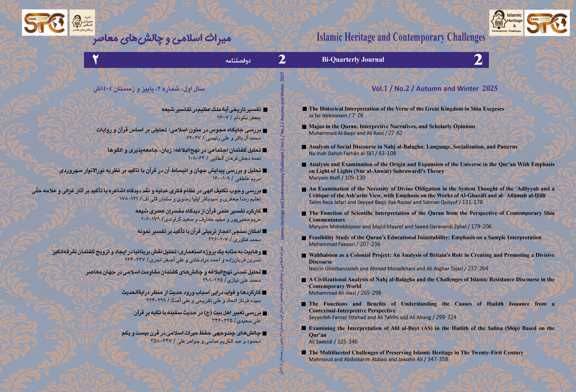
A Civilizational Analysis of Nahj al-Balagha and the Challenges of Islamic Resistance Discourse in the Contemporary World

Document Type : Original Article

Author
Corresponding Author, Assistant Professor, Department of Philosophy and Theology, Al-Mustafa University, Qom, Iran.
Abstract
This research aims to elucidate the strategic capacities of the civilizational components within Nahj al-Balagha and analyze their practical and detailed reflection in the strategic discourse of contemporary Islamic resistance movements (Hezbollah of Lebanon, Ansarullah of Yemen, Hamas of Palestine) in the face of contemporary global challenges. Adopting an analytical-conceptual approach and employing the comparative study method, the research has identified six key civilizational components from Nahj al-Balagha (Tawhid/Divine Unity, Justice, Human Dignity, Jihad, Wilayah/Guardianship, Patience). Subsequently, by analyzing the official documents and discourses of the three resistance movements, it examines how these components have been transformed into action-oriented constructs. The analyses indicate that the civilizational components of Nahj al-Balagha within the resistance discourse have evolved from the level of theoretical principles to operational mechanisms: Tawhid is crystallized in the form of the absolute rejection of external dependency (structural independence); Justice is defined as the legitimizing benchmark for the struggle against occupation and structural corruption; Human Dignity forms the foundation of the collective identity of the Ummah; Jihad is employed as a multifaceted tool for achieving justice; Wilayah plays a central role in the cohesion and networking of resistance organizations; and Patience and Steadfastness have transformed into a strategy for long-term sustainability. This analysis demonstrates that the set of components extracted from Nahj al-Balagha provides a coherent theoretical framework for confronting contemporary identity and political crises and reinforces the necessary conceptual infrastructure for the formation and continuity of a new Islamic civilization based on independence and justice.
Keywords

Article Title Persian

تحلیل تمدنی نهج‌البلاغه و چالش‌های گفتمان مقاومت اسلامی در جهان معاصر

Author Persian

محمد علی نیازی
نویسنده مسئول ، استاد یار ،گروه ،فلسفه و کلام، جامعة المصطفی العالمیة، قم، ایران،
Abstract Persian

هدف این پژوهش تبیین ظرفیت‌های راهبردی مؤلفه‌های تمدنی نهج‌البلاغه و تحلیل بازتاب عملیاتی و جزئی آن‌ها در گفتمان راهبردی جریان‌های مقاومت اسلامی معاصر (حزب‌الله لبنان، انصارالله یمن، حماس فلسطین). در برابر چالش های جهان معاصر است که با اتخاذ رویکرد تحلیلی–مفهومی و به‌کارگیری روش مطالعه تطبیقی انجام شده است. شش مؤلفه کلیدی تمدنی نهج‌البلاغه (توحید، عدالت، کرامت، جهاد، ولایت، صبر) از متن استخراج و سپس با تحلیل اسناد و گفتمان‌های رسمی سه جریان مقاومت، نحوه تبدیل شدن این مؤلفه‌ها به سازه‌های کنش‌محور مورد واکاوی قرار گرفت. تحلیل ها بیانگر این است که مؤلفه‌های تمدنی نهج‌البلاغه در گفتمان مقاومت، از سطح اصول نظری به مکانیسم‌های عملیاتی تبدیل شده‌اند: توحید در قالب نفی مطلق وابستگی خارجی (استقلال ساختاری) متبلور است؛ عدالت به‌عنوان شاخص مشروعیت‌بخش مبارزه علیه اشغالگری و فساد ساختاری تعریف شده؛ کرامت انسانی شالوده هویت جمعی امت را تشکیل می‌دهد؛ جهاد به‌عنوان ابزاری چندوجهی برای تحقق عدالت به کار گرفته شده؛ ولایت نقش اصلی را در انسجام و شبکه‌سازی سازمان‌های مقاومت ایفا می‌کند؛ و صبر و استقامت به استراتژی پایداری بلندمدت تبدیل شده است.این تحلیل نشان می‌دهد که مجموعه مؤلفه‌های استخراج‌شده از نهج‌البلاغه، یک چارچوب نظری منسجم را برای مقابله با بحران‌های هویتی و سیاسی معاصر فراهم می‌آورد و زیرساخت مفهومی لازم برای تکوین و استمرار تمدن نوین اسلامی مبتنی بر استقلال و عدالت را تقویت می‌کند.

Keywords Persian

نهج‌البلاغه
گفتمان مقاومت
میراث اسلامی
تمدن اسلامی
توحید ساختاری
چالش‌های سیاسی. جهاد ترکیبی
1.      Ibn Manzur, Muhammad ibn Makram. (1996). Lisan al-'Arab. Beirut: Dar Ihya' al-Turath al-'Arabi.
2.     Amini, Ali Akbar. (2011). Discourse of Literature on the Eve of Two Revolutions (2nd ed.). Tehran: Ettela'at.
3.    Anvari, Hassan. (2003). Dictionary (2nd ed.). Tehran: Sokhan Publications.
4.     Al-Bustani, Fu'ad Afram. (1978). Al-Munjid (2nd ed.). Tehran: Islamic Publications.
5.     Javid, Ali. (2022). Islamic Resistance with a View to the Teachings of Nahj al-Balagha. Islamic Peace Research Quarterly, 3(9).
6.     Al-Raghib al-Isfahani, Husayn ibn Muhammad. (1992). Al-Mufradat fi Gharib al-Qur'an (Researched by Safwan Adnan Dawudi). Damascus: Dar al-'Ilm al-Shamiyah.
7.    Al-Zabidi, Sayyid Muhammad Murtada. (2007). Taj al-'Arus fi Sharh al-Qamus. Beirut: Dar al-Kutub al-'Ilmiyah.
8.    Salimi Naveh, Asghar. (2009). Discourse in Foucault's Thought. Keyhan Farhangi, (219), 50–55.
9.     Al-Sharif al-Radi, Muhammad ibn al-Husayn. (n.d.). Nahj al-Balagha, Translated by Muhammad Dashti. Qom: Dar al-Hadith.
10.    Tabatabai, Muhammad Husayn. (1996). Al-Mizan fi Tafsir al-Qur'an (5th ed.). Qom: Islamic Publications Office of the Society of Seminary Teachers of Qom.
11.     Al-Tarihi, Fakhr al-Din. (1996). Majma' al-Bahrayn. Tehran: Mortaza Publications.
12.   Azadanlou, Hamid. (2001). Discourse and Society. Tehran: Ney Publishing.
13.   Al-Fayumi, Ahmad al-Maqri. (1985). Al-Misbah al-Munir. Qom: Dar al-Hijrah.
14.    Qomi Mashhadi, Muhammad ibn Muhammad Reza. (1989). Tafsir Kanz al-Daqa'iq wa Bahr al-Ghara'ib (Researched by Husayn Dargahi, 1st ed.). Tehran: Printing and Publication Organization of the Ministry of Culture and Islamic Guidance.
15.   Lakzaei, Najaf; Gholamali, Ahmad; & Masoudi, Sayyid Muhammad Ali. (2023). Islamic Awakening. Journal of Islamic Awakening Studies, 12(2, Serial 28).
16.   Masoudi, Muhammad Ali. (2023). The Relations Between Resistance and Justice in the Thought and Practice of Imam Ali (AS) (PhD Dissertation). University of Quran and Hadith, Faculty of Hadith Sciences and Ma'arif.
17.   Mostafavi, Hassan. (1981). Al-Tahqiq fi Kalimat al-Qur'an al-Karim. Tehran: Book Translation and Publishing Bureau.
18.   Motahari, Morteza. (2006). A Journey through Nahj al-Balagha. Tehran: Sadra Publications.
19.   Makarem Shirazi, Nasser. (1995). Tafsir Nemooneh. Tehran: Dar al-Kutub al-Islamiyah.
20.  Nazemi Ardakani, Mahdi. (2018). Components of the Cultural Discourse of Resistance in the Middle East. Quarterly Journal of Political Studies of the Islamic World, (26), 59–89.
21.   Valizadeh, Ali. (2009). Culture of Resistance and Soft Challenges against the Islamic Republic of Iran. Tehran: Islamic Revolution Documents Center.
22.  Fairclough, N. (1992). Discourse and social change. Cambridge: Polity Press.
23. Foucault, M. (1971). The archaeology of knowledge. London: Tavistock.
24.  Laclau, E., & Mouffe, C. (1985). Hegemony and socialist strategy: Towards a radical democratic politics. London: Verso.
Official News and Information Websites

·         almanar.com.lb/live
·         https://hamas.ps/ar/post/3087
·         https://hamas.ps/ar/post/3342
·         https://hamas.ps/ar/post/4867
·         https://hamas.ps/ar/post/4892
·         https://noo.rs/zmlT5
·         https://snn.ir/004DVs